How to Create a Cozy Christmas Composite in Photoshop
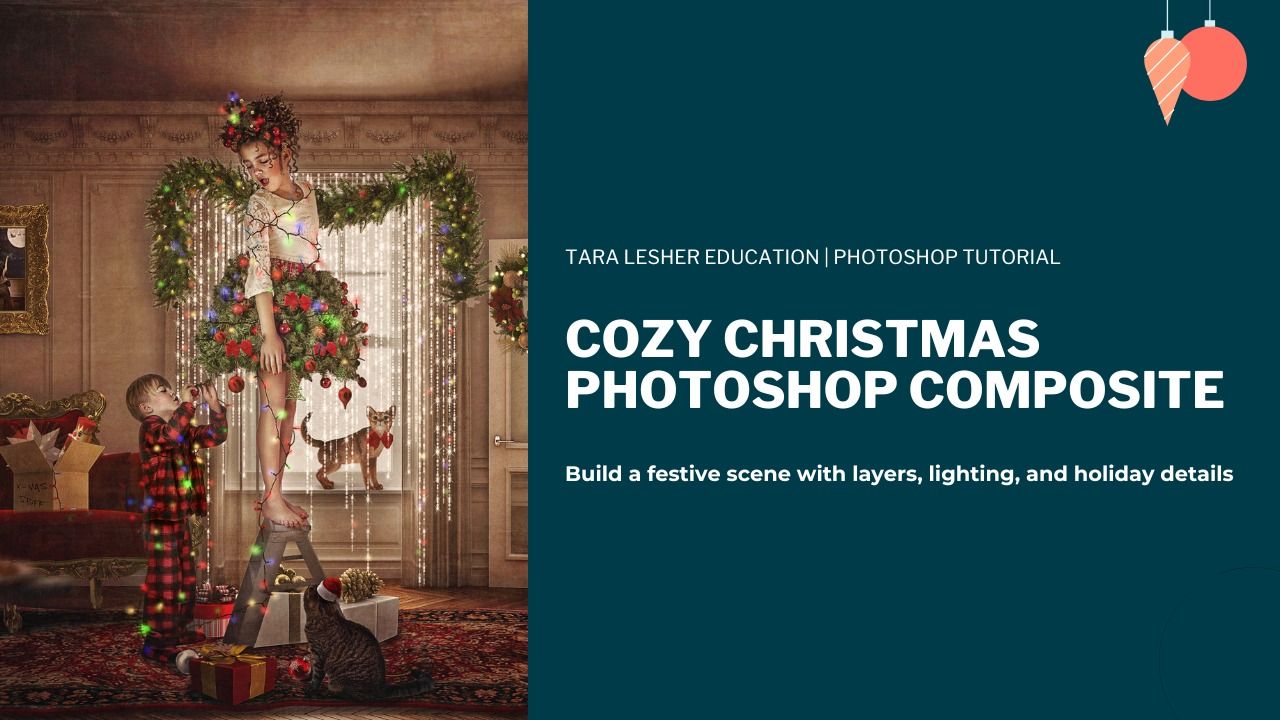
There is something so fun about building a Christmas composite because you are not just editing a portrait. You are creating a whole little holiday scene around it.
This type of edit has a lot of moving pieces. There is the room, the subjects, the furniture, the Christmas props, the shadows, the reflections, the lighting, and the final color work that helps everything feel like it belongs together.
It is more advanced than a simple portrait edit, but it is also one of my favorite kinds of projects because you can build it little by little and watch the whole scene come to life.
Start with the room and your main subjects
For this edit, I started with a simple empty room as the base.
When I build a composite like this, I like to get the main room and subjects in place first. The room gives me the perspective, the direction of light, and the overall feeling of the final image.
Once the room is ready, I bring in the main subjects. In this scene, which included the little girl, the little boy, and the cat.
This is where I pay close attention to scale. If the subjects feel too large or too small for the room, the rest of the composite will feel off before I even start adding the details.

Add personal details that help tell the story
After the main subjects are placed, I start adding details that make the room feel more intentional.
One of my favorite pieces in this edit is the framed image on the wall. It is a small detail, but it helps the whole scene feel more personal rather than like a room filled with random props.
To make the framework, I place the frame first and adjust the perspective so it fits the wall. Then I bring the image in behind it, resize it, and use a mask to clean up any areas that extend outside the frame.
This is one of those simple Photoshop steps that makes a big difference. The goal is not just to add something cute. The goal is to make it feel as if it has already been part of the room.

Build the room with larger props first
Once the main story pieces are in place, I start building out the room with larger props.
For this image, which included the couch, rug, table, fireplace details, boxes, nutcrackers, and other holiday pieces.
This is where perspective matters so much. A prop can be beautiful on its own, but if the angle does not match the room, it will look pasted in.
When I add each piece, I look at three things:
Scale
Perspective
Light direction
If those three things are working, the prop has a much better chance of blending into the scene.
Add smaller Christmas details without overcrowding the image
This is the fun part, but it is also where it is easy to go too far.
Christmas composites give you so many little details to play with: ornaments, bows, presents, candy canes, stockings, nutcrackers, snow globes, garland, and all the tiny pieces that make the scene feel festive.
But I try to add those details in a way that supports the story.
The subject should still be the main focus. If every corner is packed with bright props, the viewer will not know where to look first.
In this edit, the little details are there to make the room feel magical and finished, not to compete with the children.

Keep your Photoshop layers organized
A composite like this can build up many layers very quickly.
That is why I group related pieces as I go. For example, I may group the fireplace pieces together, the subject layers together, the couch pieces together, and the foreground props together.
It may not be the most exciting part of Photoshop, but it makes the edit so much easier to manage.
When your layers are organized, you can make adjustments without digging through a giant stack of unnamed layers. You can also tone one area, move one section, or hide a group without disrupting the whole image.
For larger composites, layer organization is not optional. It is what keeps the process workable.
Use adjustments to help everything belong together
Once the room is filled in, the image still needs a lot of blending.
This is where adjustment layers become important.
I use adjustments like Hue and Saturation, Brightness and Contrast, Curves, and color fills to help separate pieces start to feel like one finished scene.
When you are using multiple stock pieces or separate subject cutouts, everything usually comes in with different lighting, contrast, and color. That is normal.
The work happens in the blending.
I am looking for anything that feels too bright, too flat, too saturated, or too disconnected from the room. Then I adjust it until it feels more natural inside the scene.

Add warmth and light where the scene needs it
The fireplace is one of the most important light sources in this composite.
A fireplace should affect the surrounding scene. If the fire is glowing but the nearby floor, wall, and props do not pick up any warmth, the edit will feel unfinished.
To make the fireplace feel more believable, I add warm color and soft light around that area. I may use color fill layers, blending modes, masks, and a soft brush to gently build the glow.
This is where I like to work slowly. A little warmth can make the room feel cozy and realistic, but too much can make the edit look overdone.
The goal is to make the light feel like it belongs there.

Finish with atmosphere and final color
The final stage is where the composite really starts to feel complete.
At this point, I look at the full image instead of each individual prop.
I check the brightness, color, contrast, shadows, highlights, and overall mood. I also add finishing touches like vignettes, Christmas lights, and final color toning to pull everything together.
This is one of the biggest differences between a composite that looks assembled and a composite that feels finished.
The details matter, but the final toning is what helps the whole image feel like a single work of art.

A little note before you build your own
When I build a composite like this, I try not to rush into the pretty details too quickly.
The ornaments, lights, textures, and props are the fun part, but the image works better when the foundation is solid first.
I want the subject to feel placed, the room to feel believable, and the light to make sense before I start adding all the extra holiday pieces.
Christmas Composite FAQ
What should I focus on first in a Christmas composite?
Start with the main story of the image. Decide where you want the viewer to look first, then build the room, props, and lighting around that focal point.
How many props should I add to a holiday composite?
Enough to make the scene feel festive, but not so many that they pull attention away from the subject. If a prop does not support the story, I usually remove it.
Why does my composite still look unfinished?
Most of the time, it needs one final blending pass. Small adjustments to contrast, warmth, shadows, and overall color can help separate pieces feel like one complete scene.
Ready to keep learning with me?
This blog gives you one helpful piece of the process, but when you unlock All Access, I walk you through complete Photoshop edits that include time-saving assets.
You can pause, rewind, follow along at your own pace, and build the kind of edits you are excited to finish.
With 500+ Photoshop, compositing, portrait editing, and creative effect tutorials waiting for you, All Access gives you a full library of guidance for your next project.