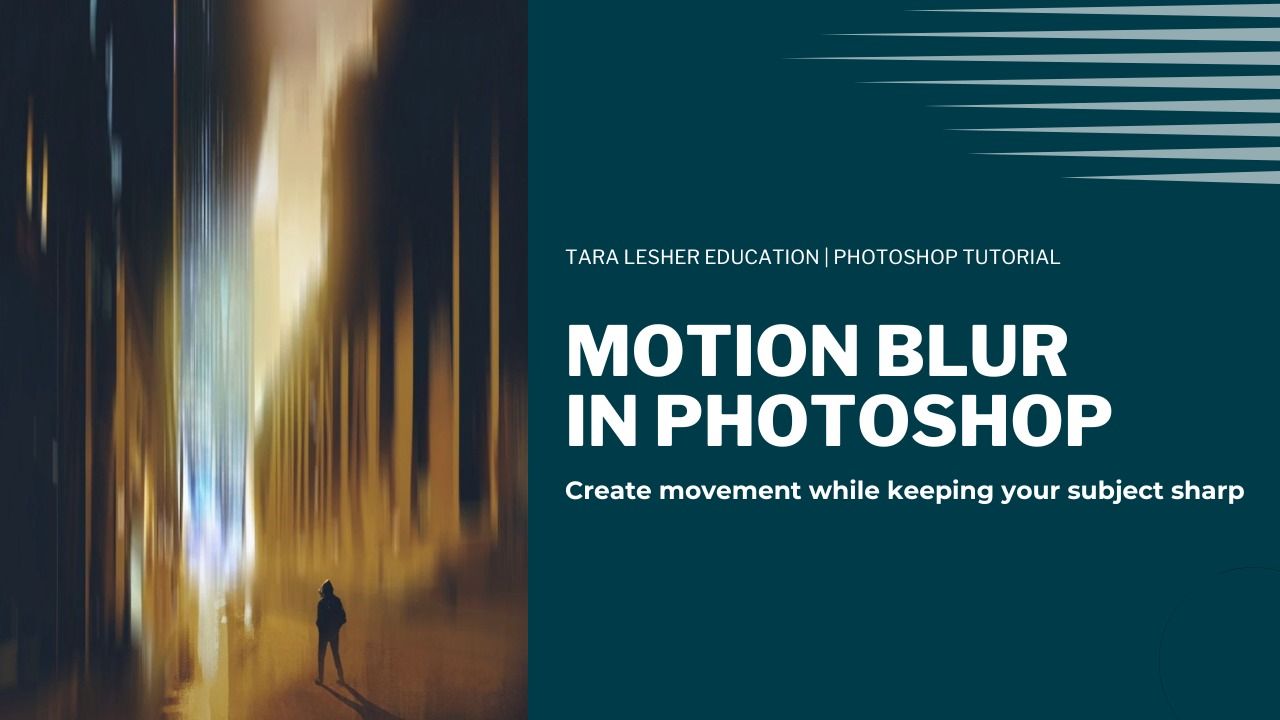
How to Create a Motion Blur Effect in Photoshop
Sometimes a simple Photoshop tool can completely change the feeling of an image.
Motion Blur is one of those tools.
It is not complicated, but when you use it intentionally, it can help add movement, atmosphere, depth, and a little extra drama to an edit without overworking the image.
I use Motion Blur often when I want an image to feel a little more cinematic, spooky, fast-moving, dreamlike, or pulled into a specific direction. It works beautifully for Halloween edits, sports portraits, dramatic composites, city scenes, and even simple backgrounds that need a little more energy.
In this tutorial, I am going to walk you through a few ways I use Motion Blur in Photoshop, including how to keep your subject sharp while still adding movement around them.
What Motion Blur does in Photoshop
Motion Blur creates a blur that moves in one direction.
Instead of softening the whole image evenly, like Gaussian Blur, Motion Blur lets you choose the angle and distance of the blur. That means you can make the blur move vertically, horizontally, or diagonally, depending on what makes sense for the image.
That direction matters.
If the lines in your image are vertical, like trees, rain, buildings, or falling elements, a vertical blur usually feels more natural. If the motion is moving across the frame, as a runner, a car, a city street, or a foreground element, a horizontal blur may work better.
The key is to make the blur follow the visual direction already present in the photo.
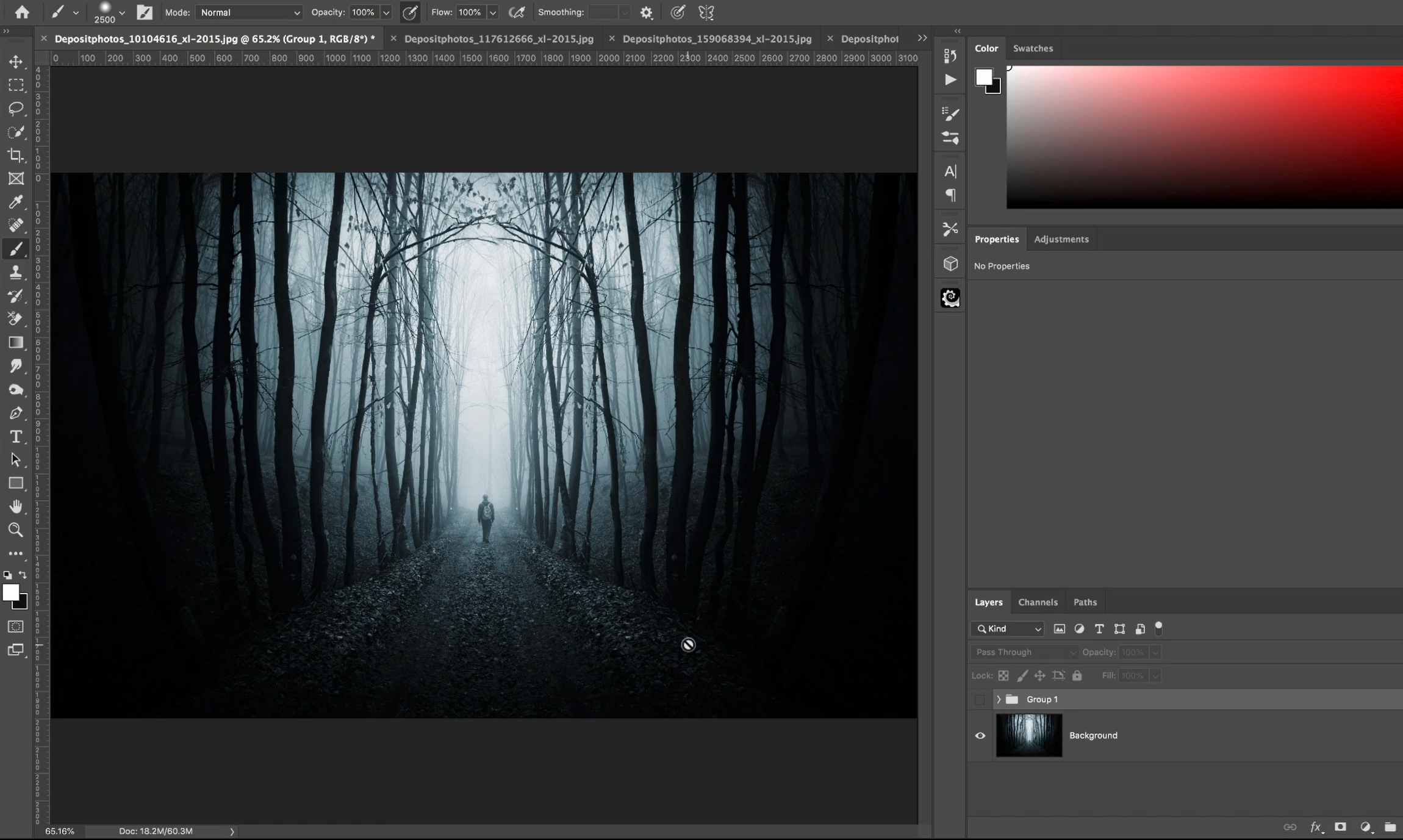
Step 1: Open your image and duplicate the background layer
Start by opening the image you want to edit in Photoshop.
Go to:
File > Open
Choose your image, then click Open.
Before applying the blur, duplicate your background layer. This gives you a backup and lets you work non destructively.
Use:
Command J on Mac
Control J on PC
Now you have a copied layer to blur while keeping the original image underneath.

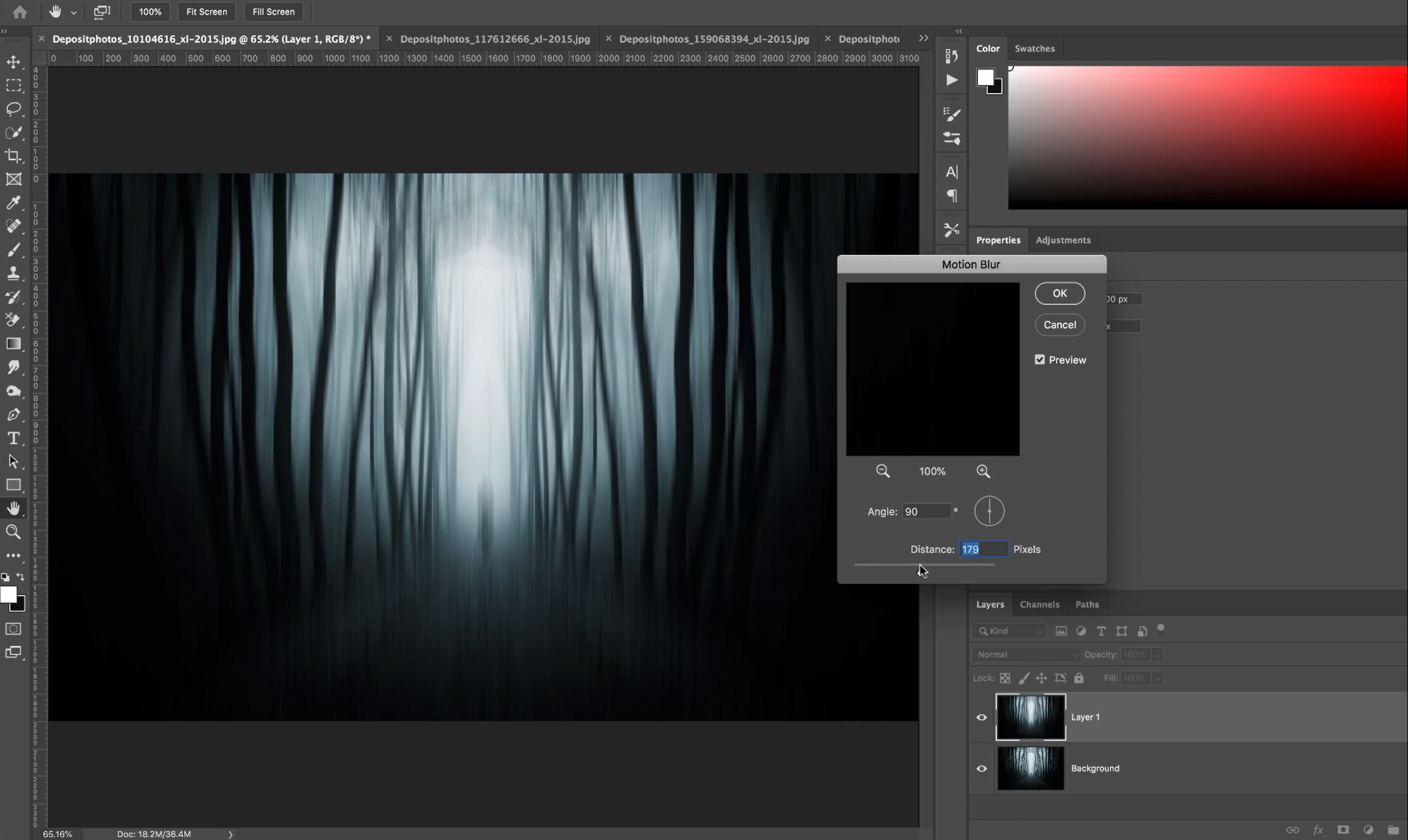
Step 2: Apply Motion Blur
With your copied layer selected, go to:
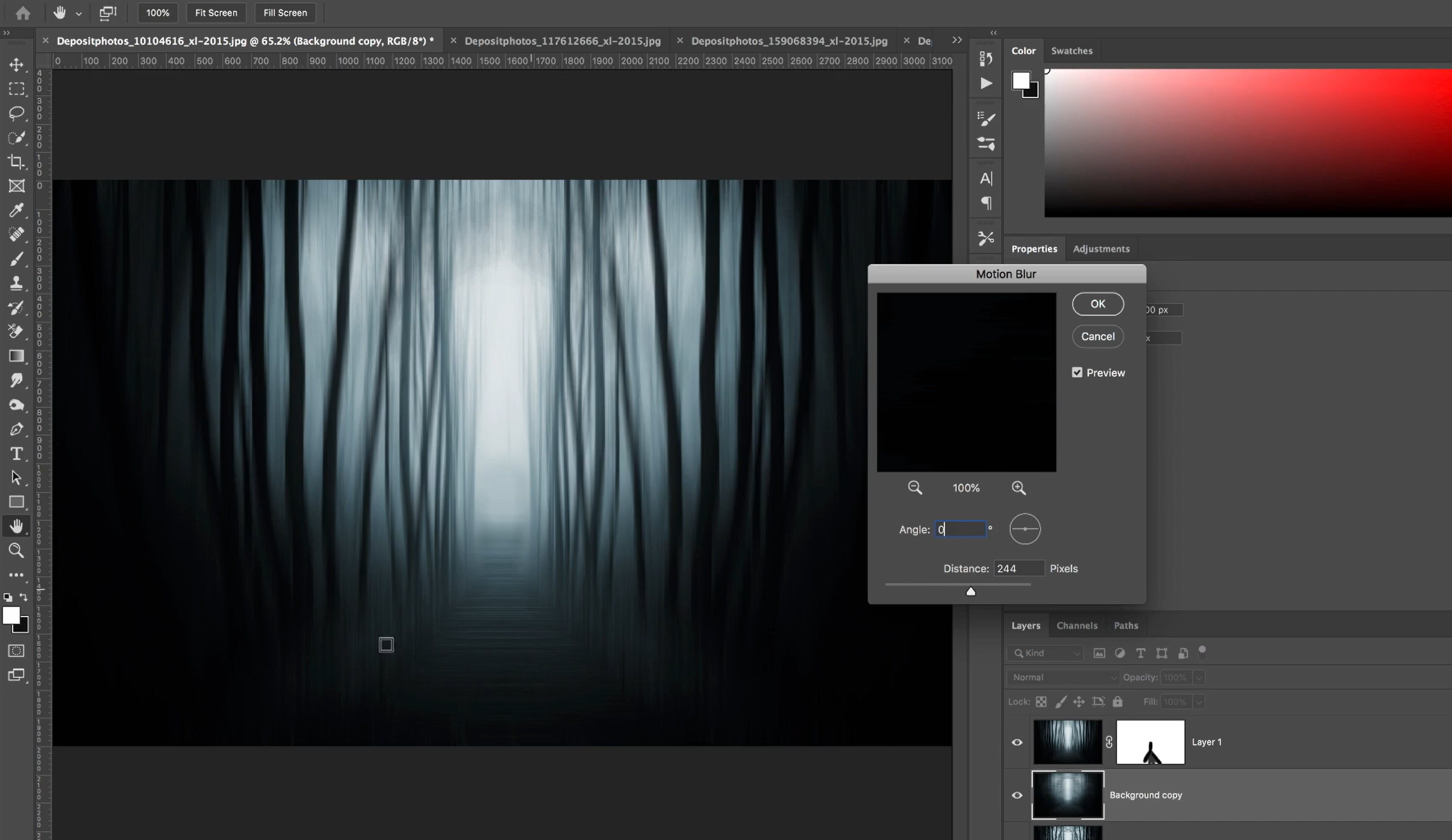
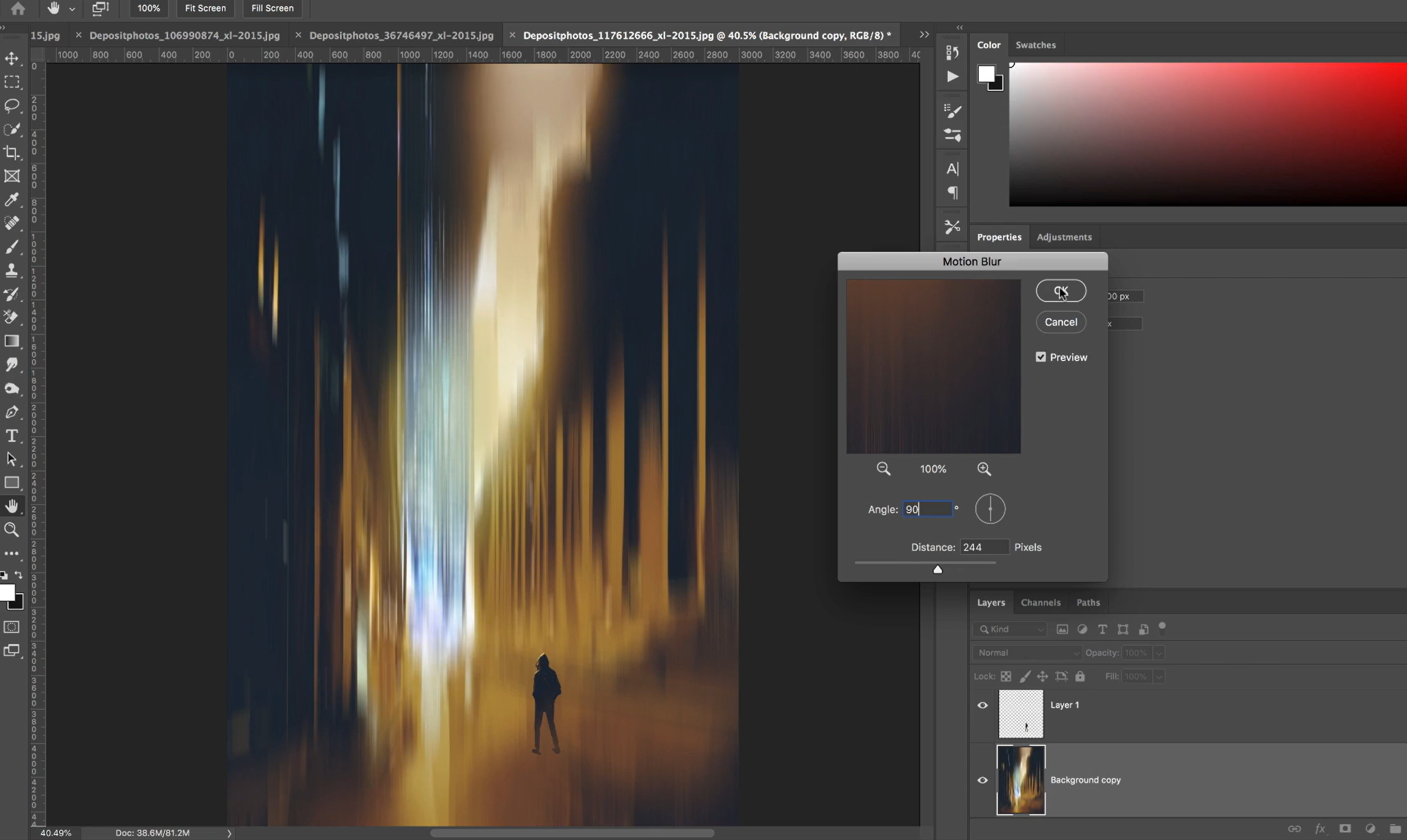
Filter > Blur > Motion Blur
This opens the Motion Blur settings.
You will see two main controls:
Angle: This controls the direction of the blur.
Distance: This controls how strong or stretched the blur becomes.
For this first example, I would match the blur direction to the tree line, so the movement flows vertically through the background.
Step 3: Use a layer mask to protect the subject
After applying Motion Blur, the whole copied layer will be blurred.
Most of the time, that is not what we want.
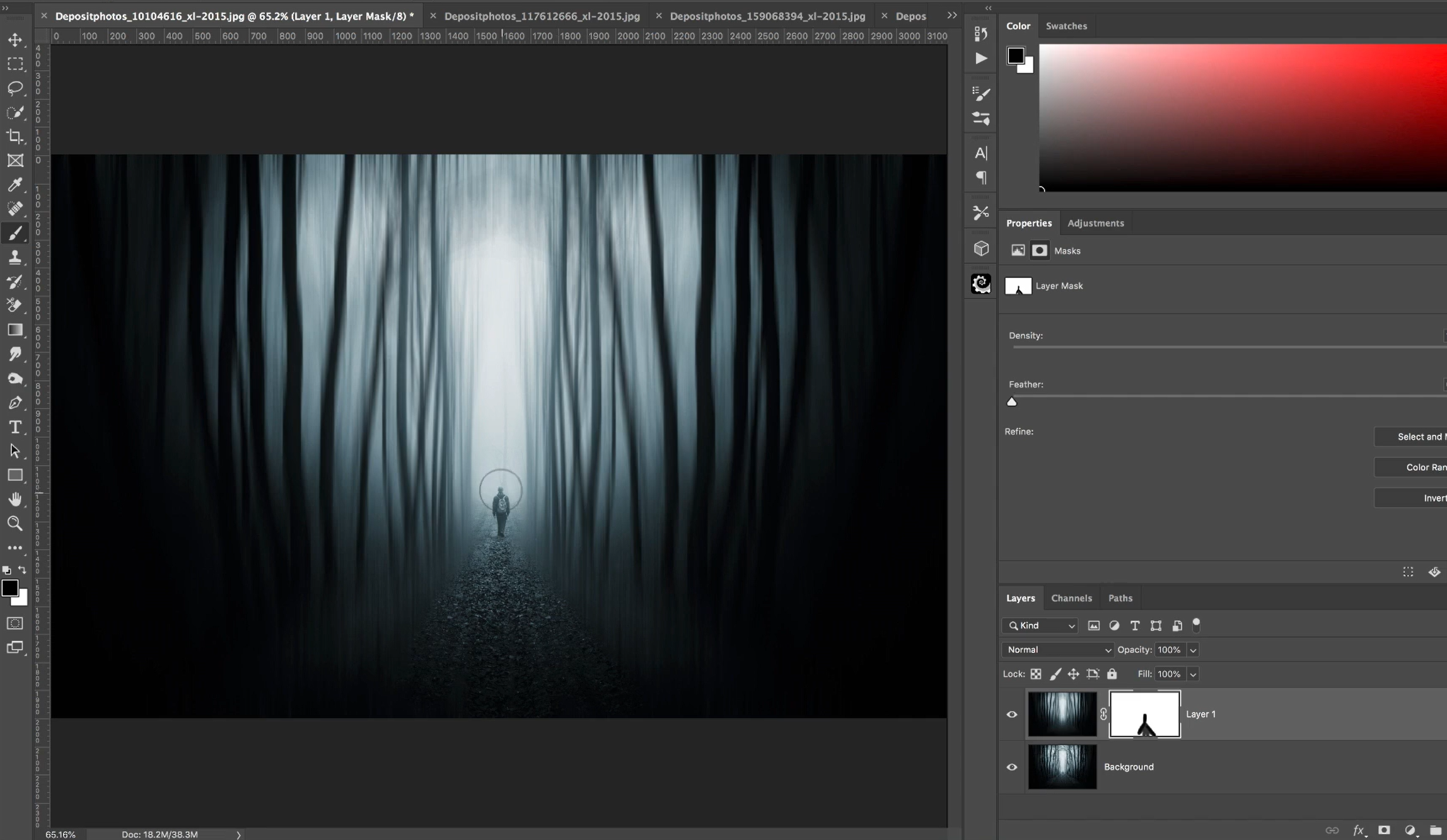
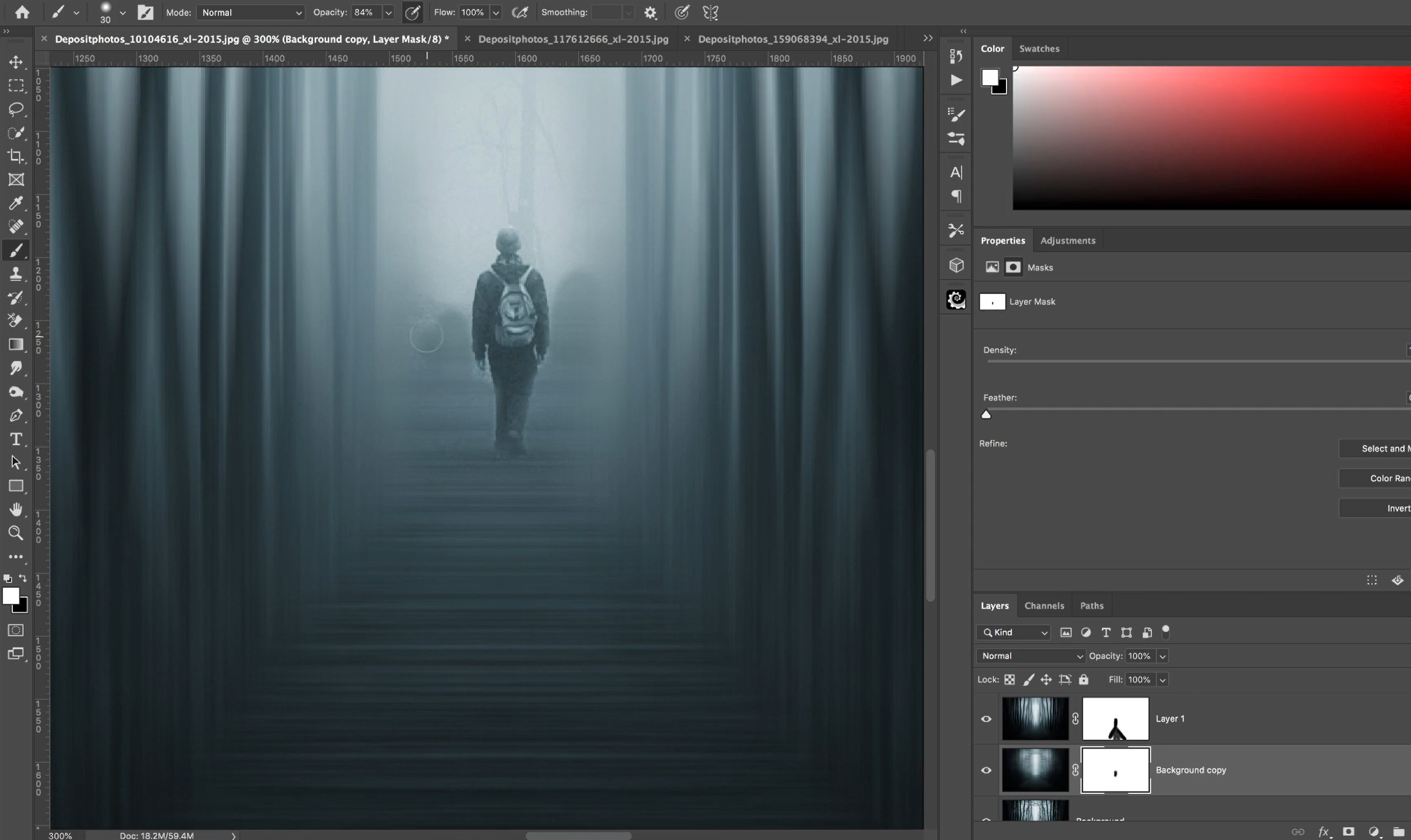
If there is a person, animal, or important detail in the image, I usually want that area to stay sharp. That contrast between a sharp subject and a blurred background is what creates the sense of movement.
To do this, add a layer mask to the blurred layer.
Then choose a soft black brush and paint over the areas where you want to bring detail back.
Usually, that means painting over the subject, face, hair, hands, clothing, or anything that should stay in focus.
Why masking matters
This step is what keeps the edit from looking like a filter was just placed over the whole image.
A good composite edit usually has control.
You are not just adding an effect. You are deciding where that effect belongs and where it should stay out of the way.
Step 4: Add a second blur direction for more depth
Once the first blur is working, you can take the effect a little further.
In this example, I would add another Motion Blur layer, but this time change the angle so the blur moves horizontally across the foreground.
This can add depth and help separate the subject from the background.
You can think of it like building layers of movement:
The background has one direction.
The foreground has another.
The subject stays sharp.
That combination gives the image more dimension.
Example 2: City Life Motion Blur
Motion Blur is also beautiful for city scenes because streets, lights, buildings, and movement already have a lot of natural energy.
For this second example, I started with a stock image and used Motion Blur to create more motion around the subject.
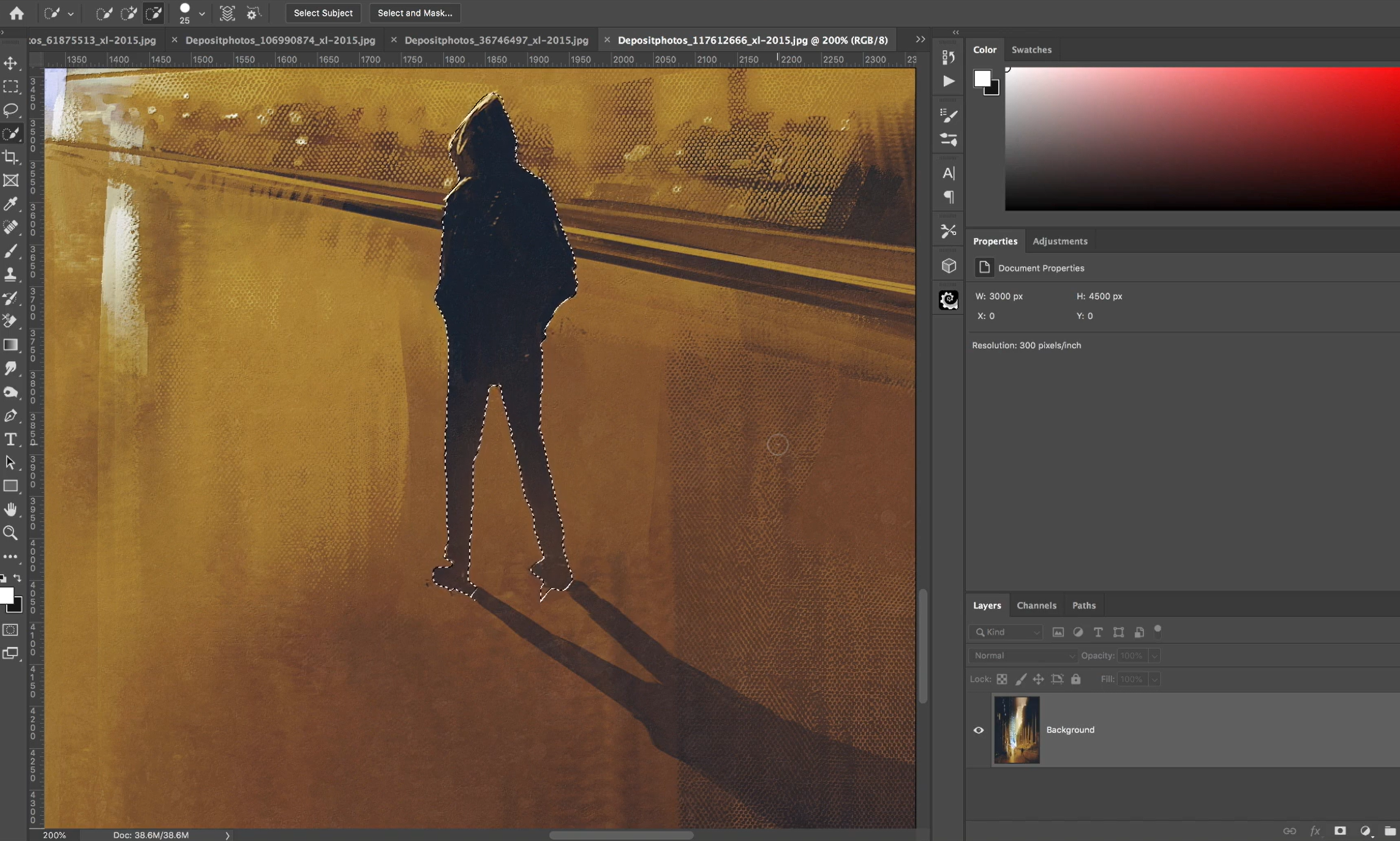
The first thing I want to do is separate the subject from the background.
You can use the Quick Selection Tool to make a selection around the subject. Zoom in close and clean up the selection as needed. If there is an open space between the legs or arms, use the minus option to remove that area from the selection.
Once the subject is selected, duplicate the subject onto its own layer with:
Command J on Mac
Control J on PC
Now the subject is separate from the background.
Step 5: Remove the subject from the background layer
Now click back onto the background layer.
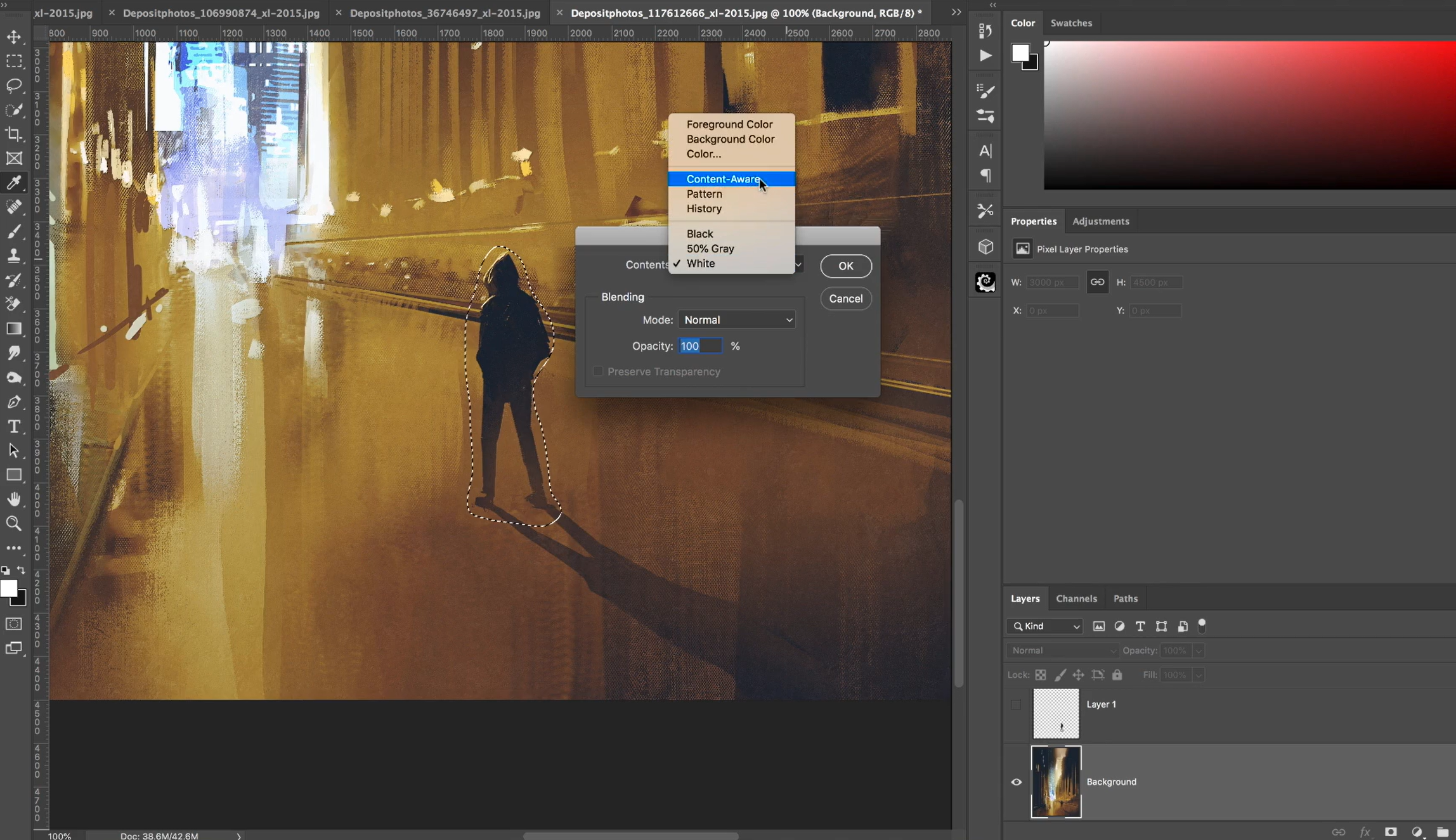
Use the Lasso Tool to make a loose selection around the subject area.
Then right-click and choose:
Fill > Content Aware
Photoshop will try to fill in that area based on the surrounding background.
This is a quick way to prepare the background for blurring without the subject smearing across the image.
And honestly, this little step can save so much cleanup time.
Step 6: Blur the background and bring the subject back
Turn the subject layer back on.
Then make a copy of the cleaned-up background layer and go to:
Filter > Blur > Motion Blur
Adjust the angle until the movement feels right for the scene.
For a city image, I usually focus on the strongest lines. That might be the street, buildings, lights, or the direction the subject appears to be moving.
Once the blur is applied, add a layer mask if needed and use a black brush to bring back any details you want to keep.
A few ways to use Motion Blur creatively
Motion Blur can be used in so many types of Photoshop edits.
Try it for:
Spooky Halloween portraits
Sports images
Running or jumping poses
City edits
Fantasy composites
Windy or dramatic backgrounds
Foreground overlays
Snow, rain, leaves, or magical effects
Painterly or cinematic edits
The trick is not to use it everywhere.
Use it where you want the viewer’s eye to feel a sense of movement.
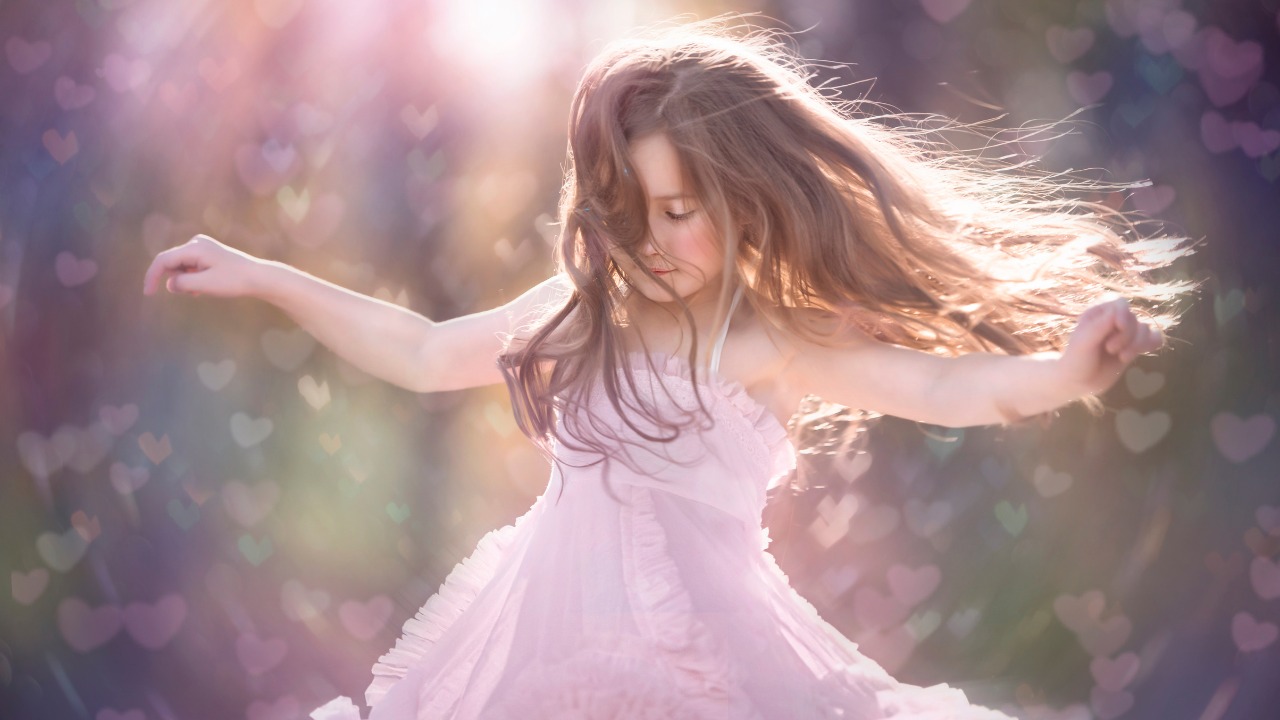
My best advice when using Motion Blur
Keep your subject sharp.
Match the blur angle to the image.
Use masks instead of applying the effect everywhere.
Start with a lower distance setting and build from there.
Zoom out often to see if the effect still feels natural.
Motion Blur in Photoshop FAQ
What does Motion Blur do in Photoshop?
Motion Blur creates a directional blur that makes an image appear to move. You can control the blur angle and the strength of the effect with the Distance setting.
How do I keep my subject sharp when using Motion Blur?
Apply Motion Blur to a duplicated layer, then use a layer mask to remove the blur from your subject or any important details you want to keep crisp.
Can beginners use Motion Blur in Photoshop?
Yes. Motion Blur is beginner-friendly because the settings are simple, but it becomes much more powerful when you combine it with layer masks and use the blur direction intentionally.
Once you start looking for places to add movement, you will probably find yourself using it more often than you expected. 😉
Ready to keep learning with me?
This blog gives you one helpful piece of the process, but when you unlock All Access, I walk you through complete Photoshop edits that include time-saving assets.
You can pause, rewind, follow along at your own pace, and build the kind of edits you are excited to finish.
With 500+ Photoshop, compositing, portrait editing, and creative effect tutorials waiting for you, All Access gives you a full library of guidance for your next project.